Description
Donate Blood, Save Lives
Blood is a vital bodily fluid and Blood transfusions are essential in various situations, including surgeries, injuries, and certain medical conditions.
Eligibility for Blood Donation
Healthy individuals aged 17 to 65 who weigh at least 110 lbs (50 kg) are eligible to donate blood.
The Benefits of Donating Blood
Donating blood provides numerous health benefits:
- Stimulates blood cell production
- Reduces the risk of heart disease and cholesterol levels
- Minimizes excessive iron accumulation in the body
- Burns calories
- May lower high blood pressure
- Decreases cancer risk
- Offers a mini health examination with each blood donation
- Provides inner satisfaction, knowing you have potentially saved three lives
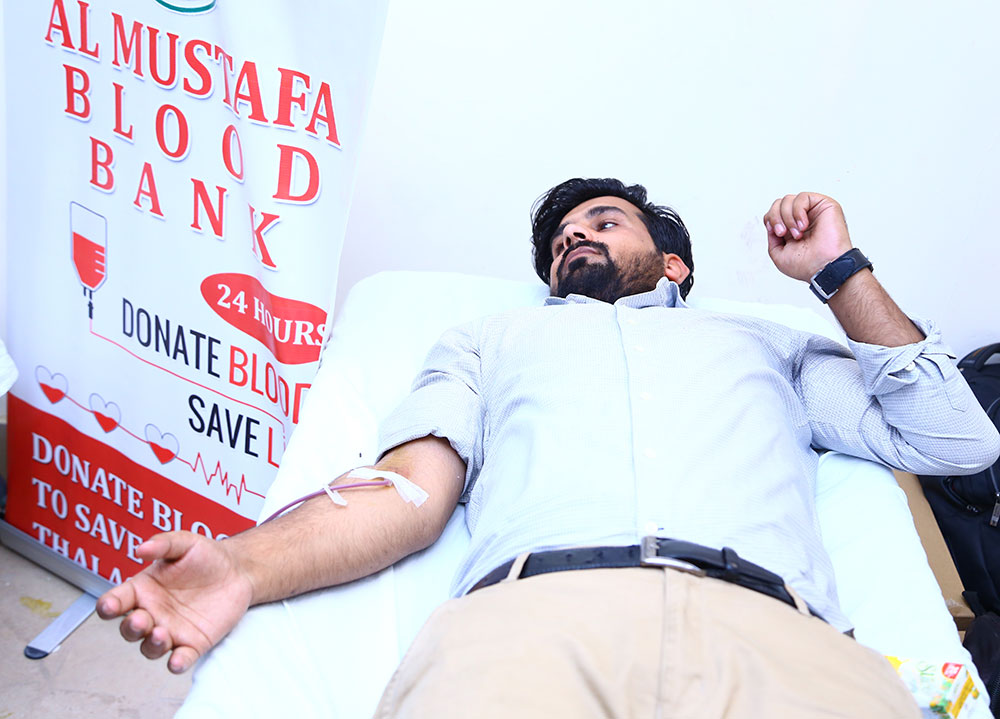
Al-Mustafa Blood Bank
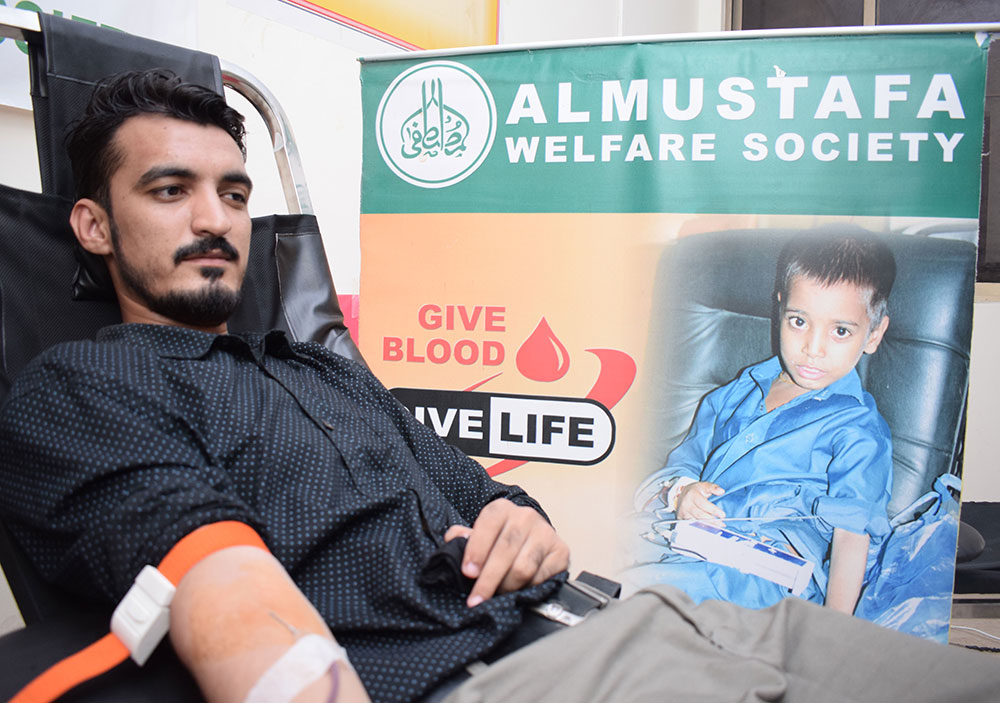
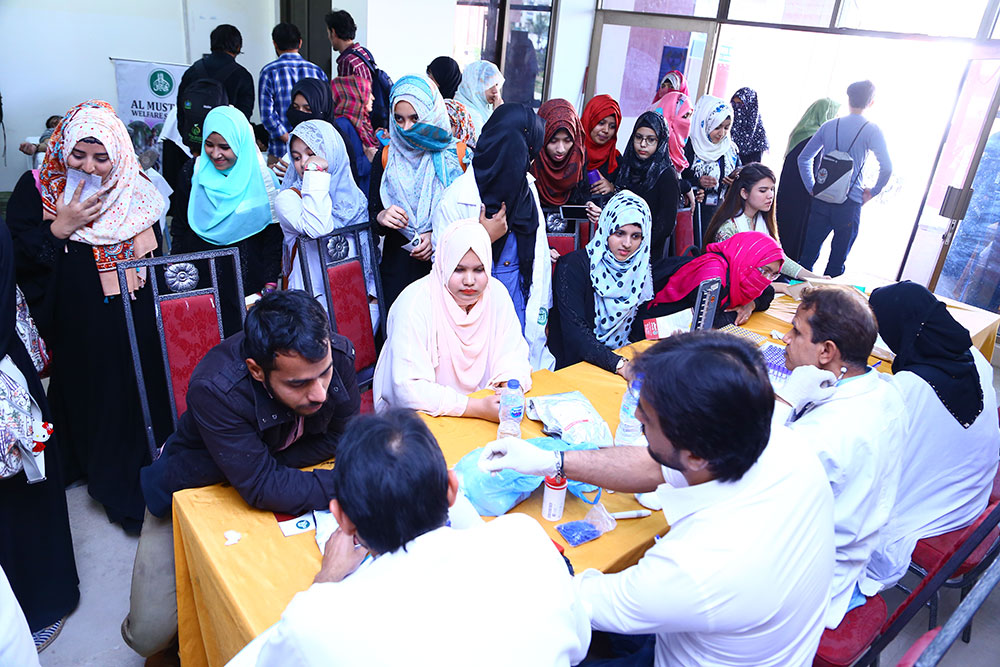
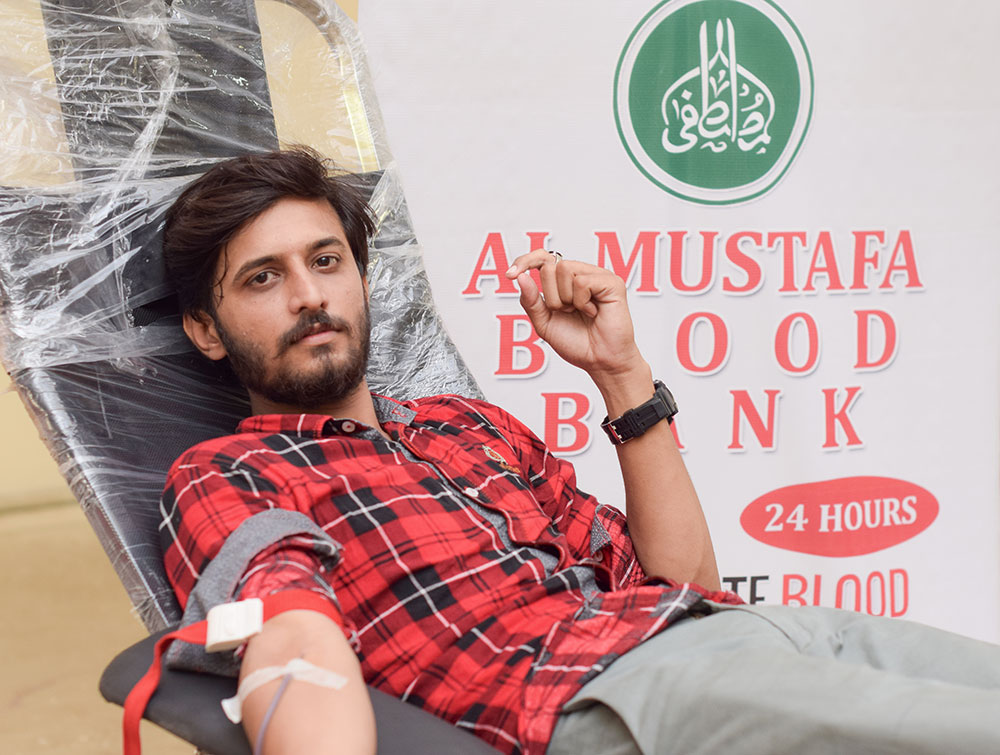
Al-Mustafa Welfare Society operates a blood bank that arranges, reserves, and supplies blood primarily to thalassemia patients, infants in NICU, and patients in ICU. Our dedicated volunteers organize blood donation campaigns and conduct donation drives at universities and various locations, ensuring a steady supply of blood. Donors receive the results of lab screenings, including their blood group and tests for hepatitis and HIV.
The Importance of Blood Screening
Collecting blood donations is only part of the process; ensuring the blood is safe for recipients is crucial. Before donating, individuals answer a series of standard questions to determine their eligibility and health status. Eligible donations undergo testing to identify blood type (A, B, O, Rh factor) and to screen for pathogens to ensure safety. The tests performed include screenings for:
- Hepatitis B & C
- HIV AIDS
- Syphilis (VDRL)
- Malaria